Instagram wants the living room. Brands need to give people a reason to stay.

Maani Safa
CEO & Founder
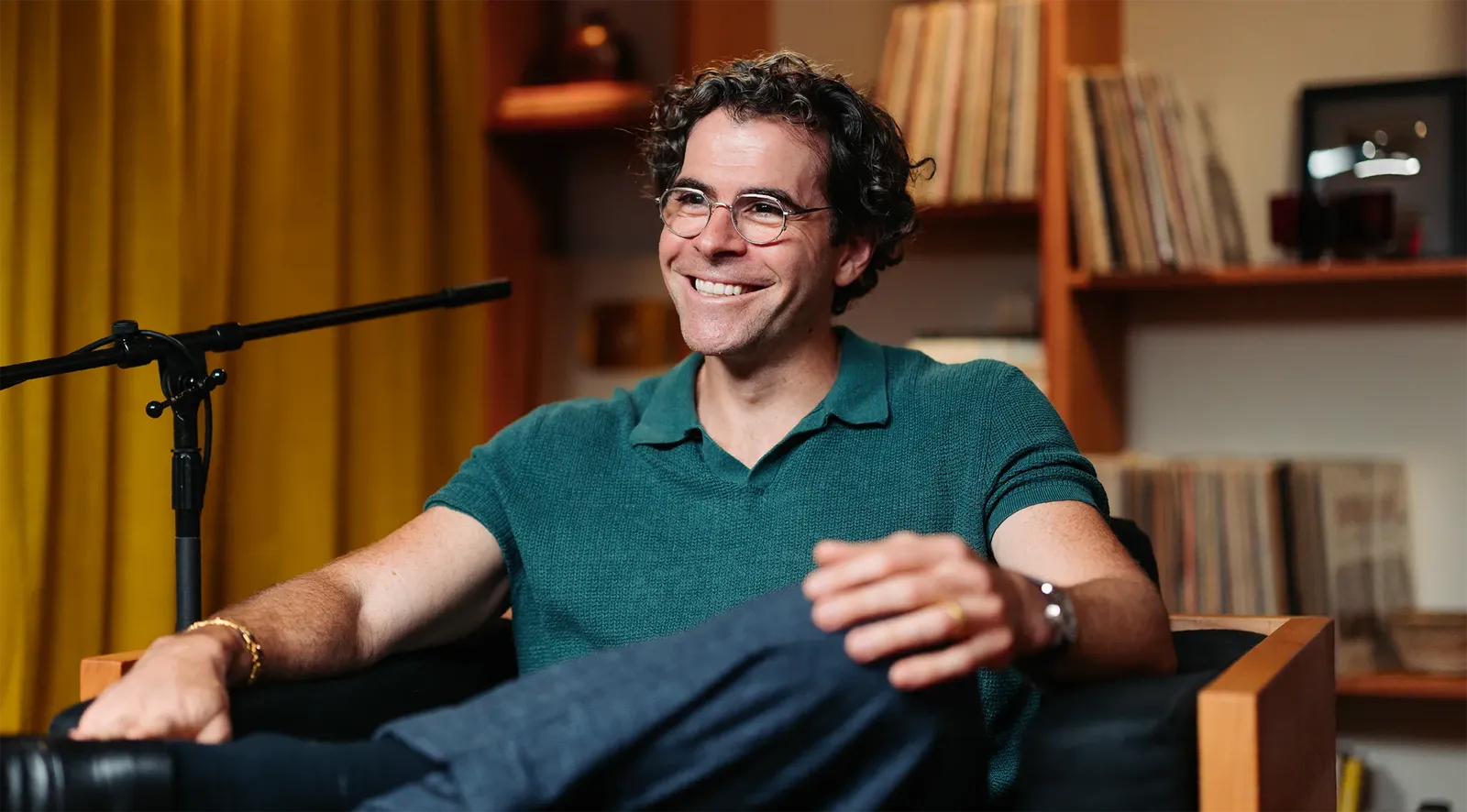
CEO & Founder, Maani Safa, explores why Instagram’s push into the living room means the new standard for brand video isn’t more content, it’s a format worth coming back to
There is something rather wonderful about an industry that spent a decade telling everyone their attention span had disappeared, only to discover they will happily watch an hour-long conversation about something they love.
People have always had time for compelling stories. What they have become exceptionally good at is recognising when we are wasting it.
That distinction feels particularly relevant as Instagram makes its next move. Adam Mosseri and Tessa Lyons have outlined a broader video ambition: longer, horizontal videos called Features, tools for organising episodic content, and closer connections between short clips and full-length viewing. These are still developing tests, including with selected creators in the US and Brazil. But the direction is becoming clear. Instagram wants to play a much larger role in what we choose to watch.
From feed to sofa
Its expansion onto television makes that ambition more tangible. Meta began testing Instagram for TV on Amazon Fire TV in the US in December 2025, subsequently expanding to Google TV and Samsung TVs. It has also explicitly discussed longer creator content, episodic series and live viewing as part of its plans for the living room.
My reading is that Meta wants to close the distance between discovering a creator and settling down to watch them. Find something compelling in your feed, follow it into a fuller story, then watch the next episode without leaving Instagram’s world.
For brands, that should prompt a more interesting conversation than whether the next shoot needs a horizontal edit. It should make us reconsider what we are making that anyone would actively come back for.
YouTube offers a powerful indication of where this behaviour can lead. In February 2025, it reported that television had overtaken mobile as its primary viewing device in the US by watch time. Globally, viewers were already watching more than a billion hours of YouTube on televisions every day. The living-room shift is well underway.
YouTube also brings something harder to replicate than a video player: an established economic relationship with creators. In September 2025, it reported paying more than $100 billion to creators, artists and media companies over the preceding four years. At the announcement of Instagram’s Features test, a comparable advertising revenue-sharing proposition had not been announced. That matters. Sustainable programming needs sustainable economics.
Build a world, not a post
For brands already investing in YouTube across long-form storytelling, short-form discovery and creator partnerships, this is a reason to deepen that commitment. Continue to evolve the formats, talent relationships and audience understanding you have built, while exploring how those ideas could extend naturally onto Instagram as access expands. The direction of travel reinforces the value of that investment: consumers are choosing to spend meaningful time with content worth watching.
For brands yet to build that foundation, now is the moment to develop an integrated strategy across YouTube and Instagram. Consider how short-form video, longer episodes and live experiences can work together around serialised formats and distinctive, repeatable intellectual property your brand can own. Creators should play a central role in shaping that proposition, bringing their editorial instincts, audience relationships and storytelling craft into its development. Build a recognisable world that can travel across both platforms, with each format giving people a different reason to discover it, spend time with it and return. Let audience behaviour determine how that investment evolves.
The bigger opportunity is to develop recognisable formats.
Vogue’s 73 Questions is a beautifully simple example. The premise is immediately understood: a personality, a setting and a rapid sequence of questions. The guest changes, but the audience knows the experience it is returning to. That consistency gives each new instalment a head start.
Red Bull provides a valuable brand example through Who is JOB?, its series following surfer Jamie O’Brien and his friends. Across eight seasons, it built a continuing world around people, adventure and a distinctive attitude. My takeaway is that the brand’s worldview can provide the organising idea for entertainment, allowing the product to take a quieter role.
There is a lesson here for luxury and automotive brands in particular. These businesses often have extraordinary access to craft, characters and technical obsession, yet those stories can become flattened into interchangeable launch films.
Imagine a recurring Porsche series following the people who keep remarkable cars alive: an engineer chasing an elusive sound, a trimmer restoring an interior, an owner tracing a car’s history. Each episode would have its own human tension and resolution, within a format viewers could recognise.
That is an illustrative opportunity, rather than a description of an existing programme. But it shows how much editorial potential already exists inside a brand. The raw material is there. The creative task is to find the story within it.
Plan for the whole viewing journey
Length must follow that story. Permission to upload ninety minutes does not create a reason for anyone to watch them.
A useful film might take four minutes. A compelling conversation might deserve forty. Entertainment is a perfectly worthwhile outcome, too. We do not need to pretend that every enjoyable experience must also be a productivity exercise. But we should be able to articulate what the audience receives in return for its time.
This changes how we choose collaborators. Follower counts give us one piece of information; returning viewers, audience trust and the ability to sustain a story give us others. A creator who consistently brings the right people back may be a more valuable partner than someone whose biggest asset is an impressive profile number.
It also changes the production brief.
Teams need to plan the full viewing journey from the outset: the moment that introduces the idea, the episode that rewards curiosity, and the next instalment that builds familiarity. Vertical clips need their own rhythm. Television asks more of sound, pacing and composition. Live content needs a reason for people to participate at that particular moment.
From a Poppins perspective, the opportunity I see for brands is to bring strategy, creative, production, creators and media into that conversation together, early enough to shape the idea. This requires shared editorial judgement and a realistic commitment to keeping a worthwhile format alive.
AI can help with the labour around it: transcription, localisation, versioning and finding potential moments within longer footage. As those capabilities make production easier, taste and editorial judgement become even more consequential. An efficient workflow is valuable when it gives talented people more room to make something exceptional.
Measurement must mature alongside the work. Reach remains useful, but I would also want to know whether people stay, return, seek out another episode and develop a stronger association with the brand. Where the objective is commercial, that attention should connect to relevant actions, from qualified enquiries to product consideration.
Early results on a new platform feature deserve curiosity and careful testing. A promising first upload gives us a hypothesis; sustained viewing across a series gives us something we can build on.
The next episode
As we look towards 2027, I expect the boundaries between social content, creator programming and television to become increasingly fluid. Instagram’s ambition is a significant part of that story. YouTube’s established viewing habits and creator economy set a demanding benchmark.
For brands, the enduring opportunity is to create something with enough character, consistency and value to earn a place in people’s lives.
Before commissioning the next series, I would put one question at the centre of the brief: What would make someone look forward to the next episode?
Why don’t you check out...
Instagram wants the living room. Brands need to give people a reason to stay.
Instagram is heading for the living room, and permission to go longer isn’t a reason to watch. Maani Safa on why brands need formats people choose to come back to, and the one question to ask before the next brief.
Instagram wants the living room. Brands need to give people a reason to stay.
Instagram is heading for the living room, and permission to go longer isn’t a reason to watch. Maani Safa on why brands need formats people choose to come back to, and the one question to ask before the next brief.

Branding in the legibility era
Purpose-driven branding no longer cuts it. Today's consumers demand transparency over manifestos, here's why showing your operational reality is the new standard for building lasting brand trust.
The untapped fans that auto/moto brands need to know about.
Strategy Director Tom Rabin explains the growing importance and untapped opportunities in prioritising fandom over loyalty.